Tronxy Crux 1 Reviews: See Why 0 Shoppers Rated It 0 Stars!
It’s not just hype. The Tronxy Crux 1 3d printer earned its 0/5 from 0 real users. But what’s behind those stars?


 Recaptor
Tronxy Crux 1 3D Printer Review: An Entry-Level DIY Printing Solution
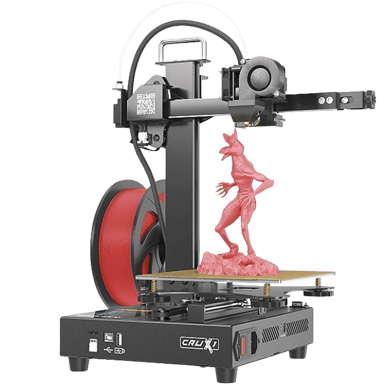
When it comes to affordable, beginner-friendly 3D printers, the Tronxy Crux 1 certainly makes a strong first impression. Released in 2022, this compact FDM/FFF printer is designed primarily for consumers starting in 3D prototyping and creative fabrication. With its moderate build volume and kit-style assembly, the Crux 1 fits right into the space where ease of use and adaptability intersect. Based on its measurable engineering specs, this model attempts to deliver a balance of precision, speed, and expandability, all within a highly accessible price point.
Detailed Specifications & Features
On paper, the Crux 1 presents a well-rounded profile. It sports a build volume measuring 7.087 inches in width, depth, and height, translating to a cubic build space of around 355.77 cubic inches. This footprint makes it ideal for prototyping small to medium-sized objects without demanding excessive desktop space; its own space requirement is just over 1.16 square feet.
Power-wise, the printer operates with an internal power supply that supports a wide voltage range of 110 to 220 volts, consuming 240 watts at peak and maintaining a modest 10 watts when idle. Though it lacks an energy-saving mode, this consistent power delivery supports stable printing conditions across environmental ranges from 46.4°F to 104°F, with humidity compatible between 20% and 80% relative levels. The robust temperature allowance, along with the operating temperature range, accommodates a variety of filament materials. This brings us to filament compatibility. It supports broadly used filaments such as PLA, ABS, PETG, and TPU, all through a standard 1.75mm diameter. The direct drive extruder system can reach a maximum temperature of 527°F, which is sufficient for most everyday filaments, though it doesn't extend into exotic material temperature zones.
The print bed is heated, able to reach up to 212°F, allowing better adhesion and quality prints with ABS and PETG. The heated bed works within a tight temperature gradient of 5°F to ensure consistent printing conditions. On the user interface end, a 2.8-inch touchscreen with a resolution of 320x240 pixels offers straightforward navigation, which beginners will find welcoming. Connectivity options include USB and TF Card for local file transfers, working with typical 3D printer file formats like STL, OBJ, and G-code. Notably, no proprietary software is required, and popular slicers like Cura and Simplify3D are supported out of the box.
User Experience & Performance (Based on Specs)
Design & Build
With a compact footprint (roughly 16.81 inches wide, 12.36 inches deep, and 16.22 inches tall), the Tronxy Crux 1 is designed with a Cartesian-style open frame that balances rigidity and accessibility. Weighing about 12.79 pounds, it's light enough to relocate but stable enough to minimize vibrations, though it lacks specific vibration compensation features. The magnetic, spring-loaded build plate uses a textured PEI surface that improves filament adhesion while remaining removable for ease of part removal. However, users must level the bed manually, as it does not have an auto-bed-leveling sensor, which might challenge some beginners.Performance
The printer can officially hit maximum print speeds of 150 mm/s, but measured effective speeds settle closer to 60 mm/s, a more realistic pace ensuring quality and precision. It boasts a minimum layer resolution down to 100 microns, enabling relatively fine detail. Features like auto-first layer calibration, spaghetti/fault detection, and print recovery in the event of power loss add layers of reliability, driving a noted print success rate of approximately 90%. The noise level during operation measures about 55 decibels, comparable to a normal conversation.Materials & Compatibility
This printer supports popular thermoplastics compatible with most entry-level machines, but doesn't accommodate resin printing or multi-materials simultaneously. Filament drying is a necessary pre-print step, highlighting the lack of a built-in filament dry box. The single extruder setup is replaceable and uses a direct drive, which generally improves performance with flexible filaments like TPU.Extra Features
The Crux 1 includes useful, though basic, safety features such as overheat protection and auto-shutdown on error, bolstered by certified compliance with CE, FCC, and RoHS standards. There is no enclosure lock or fireproof build plate, making it more suitable for supervised environments. While it doesn't support cloud management, remote monitoring, or predictive failure logs, its firmware is updateable via local means.Pros & Cons
Pros
- Affordable Entry-Level Price with Solid Build Volume
- Supports Widely Used Filament Types and Popular Slicers
- Reliable Print Recovery and Fault Detection Features
- Compact Design Suitable for Small Workspaces
Cons
- Lack of Auto Bed Leveling and Filament Runout Sensor
- No Energy Saving Mode or Air Filtration for Longer Prints
- Manual Bed Leveling and No Multi-Material Printing Capability
Price & Value for Money
Priced at $179.99 at Tronxy3DPrinter.com, the Crux 1 offers a remarkable entry-level package for hobbyists and newcomers alike. Given its 1-year warranty and the versatility afforded by its wide power supply range, the investment feels justified. However, those seeking advanced automation or professional-grade features may find it limiting. Still, for the price, it stands as a capable performer that helps users get hands-on 3D printing effectively.Quick Take
In short, the Tronxy Crux 1 offers solid foundational specs that suit beginner 3D printing needs without overwhelming complexity. If we look at the numbers alone, it stands out as a compact, reliable, and affordable tool that supports essential materials and a user-friendly interface. While it lacks some advanced automation features, its fault detection and print recovery boost confidence for novices.Closing Recommendation
The Crux 1 may be ideal for hobbyists or learners looking for an accessible, no-fuss entry into 3D printing. It appears to perform best for users willing to calibrate and actively maintain their device manually. Overall, it helps users achieve quality print results within a manageable price range, emphasizing practical use over premium bells and whistles.Verdict
Rating: Based on the specifications and overall feature set, we believe Tronxy Crux 1 deserves 4.1 out of 5.
- Winner Feature => Excellent balance of build volume and supported filament types for beginners.
- Needs Improvement => Lacks key automation like auto bed leveling and filament runout sensor, which affects ease of use.
Reviews 0
The good, the bad, and the brutally honest.Average Rating

More 3D Printers 453
Unlock more awesome finds.